
MATERNA BIRTH PREPARATION COURSE
A more informed, intentional, and supported approach to birth.

The Materna Birth Preparation Course is an online birth education experience created to help you understand birth, prepare your body and mind for labor, and feel confident navigating the decisions that come with bringing your baby into the world.
Think of it as having a doula’s knowledge and guidance at your fingertips, with the opportunity to learn, ask questions, and prepare for your birth in a way that feels personal to you.
We’ll explore the science and physiology of birth, traditional comfort measures, pain management, medical interventions, hospital practices, and everything in between. You’ll learn about your body, the natural processes of labor, the role of modern medicine, and the different ways you can be supported throughout your experience.
At Materna, we believe in bringing evidence-based education together with the wisdom of traditional birth practices. There’s so much to learn from both. We want you to understand the science, but also reconnect with the instinctive, physiological side of birth.
Whether you’re planning a hospital birth with an epidural, hoping for an unmedicated vaginal birth, considering a home birth, or simply figuring out what feels right for you, this course was created with you in mind.
There is no one way to give birth, and our intention is never to push you toward a particular experience. It’s to make sure you have the knowledge to make informed decisions, the tools to advocate for yourself, and the preparation to navigate different possibilities.
WHAT WE’LL COVER
Over four weekends, we’ll walk through the different stages of pregnancy, labor, birth, and postpartum, covering the things I believe every woman should have the opportunity to learn before giving birth.
-
Let’s start by understanding what actually happens inside your body during labor and birth.
We’ll explore the anatomy of the pelvis, uterus, cervix, and pelvic floor, the hormones involved in labor, and the physiological processes that allow your baby to make their way into the world.
We’ll also discuss:
The physiology of spontaneous labor and vaginal birth.
How your baby moves through the pelvis.
Fetal positioning and its relationship to labor progression.
Positions, movements, and techniques that can encourage optimal fetal positioning.
How the environment, hormones, and nervous system can influence the labor experience.
Traditional comfort measures and the role of ancestral birth practices.
I want you to understand your body, not just memorize what happens during labor. There’s something incredibly valuable about knowing why your body does what it does and understanding how you can work with those physiological processes.
-
We’ll talk about what labor actually feels like, how to recognize its progression, and how to prepare for the different stages.
We’ll cover:
Early signs of labor and how to recognize them.
The different stages and phases of labor.
When to stay home and when it’s time to go to the hospital.
Breathing techniques, movement, positioning, and relaxation.
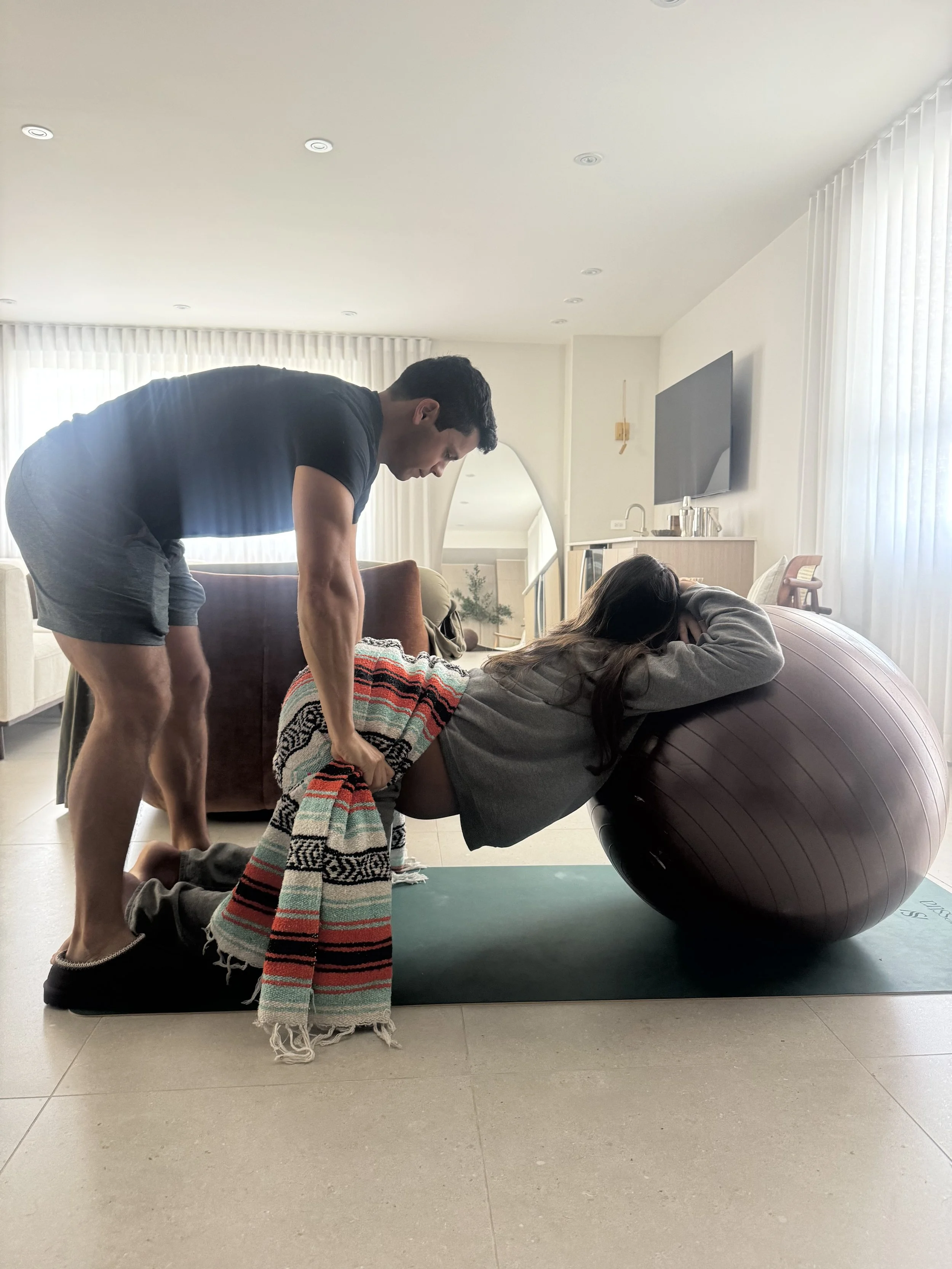
Massage, counterpressure, hydrotherapy, and other comfort measures.
Natural and medical pain management options, including epidurals.
How your birth partner can support you physically and emotionally.
Creating an environment that supports relaxation and labor progression.
Your partner or birth companion will also have an important place in this preparation. We’ll discuss practical ways they can participate, what to expect, how to support you through contractions, and how to become an active part of your birth team.
-
I believe every woman should understand the medical side of birth, even if she is hoping for an entirely physiological experience.
We’ll discuss common medical interventions, why they may be recommended, their potential benefits and risks, and what alternatives might be available depending on the circumstances.
Some of the topics include:
Labor inductions and the different methods used.
Pregnancy-related conditions that may influence birth recommendations.
When induction may be medically necessary.
Pitocin and induction
Artificial rupture of membranes.
Continuous fetal monitoring.
Assisted vaginal births.
C-sections and the circumstances that may lead to one.
Medical pain relief and epidural options.
We’ll look at the pros and cons of these interventions and discuss how to approach conversations with your medical team, ask questions, and make informed decisions.
The intention isn’t to avoid medicine. It’s to understand it. To know when an intervention can be beneficial, when it may be necessary, and when you may have other options worth discussing with your provider.
-
This is one of my favorite parts of birth preparation because there are so many little details that can make a difference in your hospital experience.
Especially here in Puerto Rico, understanding the hospital you’re delivering at, its practices, and what to expect when you arrive can help you feel much more prepared.
We’ll discuss the hospital experience beyond just labor and delivery, including:
What happens when you arrive at the hospital.
Admission, triage, and the transition into your labor room.
Hospital policies and practices that are important to know ahead of time.
Rooming-in and keeping your baby with you after birth.
Immediate newborn procedures and routine hospital practices.
Skin-to-skin contact and early breastfeeding.
Your rights and your options as a birthing woman in Puerto Rico.
Questions worth asking your hospital and medical team before delivery.
Practical tips to help you have a more comfortable and supported hospital experience.
We’ll also discuss details specific to the hospital you’re planning to deliver at, so you can better understand what to expect rather than walking in without knowing how things work.
And, of course, you’ll receive a Hospital Packing List with the essentials for you, your baby, and your birth partner. I’ll also share the little things that are easy to overlook but can make your hospital stay more comfortable.
-
This is something I feel particularly strongly about as a doula.
We all have an idea of how we’d like our birth to unfold, but birth can be unpredictable. I always encourage families to prepare for different possibilities, not because we expect something to go wrong, but because being prepared gives you more confidence when decisions need to be made.
Together, we’ll work through your preferences and create different birth plans:
A hospital vaginal birth plan.
A home birth plan.
A cesarean birth plan.
We’ll discuss your preferences surrounding pain management, monitoring, interventions, immediate postpartum care, newborn procedures, and more.
Having a plan for different scenarios allows you to remain involved in your care, even if your original expectations change. You deserve to feel informed, respected, and heard regardless of how your baby arrives.
-
We’ll also spend time preparing for what comes after birth.
The first weeks with a newborn are a significant transition, and I want you to give that period the same thought and attention you’re giving your birth.
We’ll cover:
Physical recovery after vaginal and cesarean birth.
What to expect during the first days and weeks.
Breastfeeding and feeding preparation.
Newborn care and what to expect at home.
Building your postpartum support system.
Preparing your home and family for baby’s arrival.
Creating a realistic postpartum plan.
My hope is that you leave this course thinking not only about the day you give birth, but also about how you want to be cared for once you’re home with your baby.
WHAT’S INCLUDED
Your enrollment in the Materna Birth Preparation Course includes:
Four live Zoom sessions
We’ll meet every Saturday for four consecutive weekends at 11:00 AM. These sessions will be an opportunity to learn, ask questions, and explore each subject together.
Unlimited access to class recordings
Life happens, and I understand that not everyone will be able to attend every live session. All sessions will be recorded, so you’ll have access to revisit the material whenever you need.
Educational PDF guides
You’ll receive downloadable educational resources for every subject we cover throughout the course.
Birth planning resources
Practical guidance to help you organize your preferences and create your hospital, home birth, and cesarean birth plans.
Hospital Packing List
A practical guide to help you prepare everything you’ll need for your hospital stay, including the little things you might not think about until you’re already there.
Postpartum planning resources
Guidance and tools to help you prepare for your recovery, newborn care, feeding, and the transition home.
January 16 – February 6, 2027
Four consecutive Saturdays at 11:00 AM
Online via Zoom.
All class recordings and educational materials will be available to enrolled participants.
COURSE DETAILS
INVESTMENT
BLACK FRIDAY SPECIAL
FULL PAY
$600
$500
2 PAY
$350
$300
Call me at 787-414-5106
I’ve been working with women through pregnancy, birth, and postpartum since 2017, and one thing that has remained at the center of my work is education.
I love the moment when a woman begins to understand what’s happening in her body, when something that once felt unfamiliar or intimidating starts to make sense. I love seeing women become more comfortable asking questions, exploring their options, and taking an active role in their care.
My approach to birth brings together evidence-based education, a deep respect for the physiology of birth, and an appreciation for the traditional knowledge that women have passed down through generations.
I believe in modern medicine. I believe in the importance of skilled medical care and knowing when it is needed. And I also believe that we shouldn’t lose sight of the natural processes of birth, the importance of our environment, the support of the people around us, and the simple things that have helped women through labor for generations.
I created the Materna Birth course to share the knowledge I bring into my work as a doula and make it accessible to more women, whether or not they have individual doula support.
I want you to walk into your birth feeling that you’ve done your preparation, that you understand your options, and that you have a voice in your experience.
I’m so happy you’re here.
Welcome to Materna,
Beatriz Bonnin